Why Does Everyone Swear by L’Oreal True Match But I Still Can’t Find My Shade After Three Drugstore Trips_
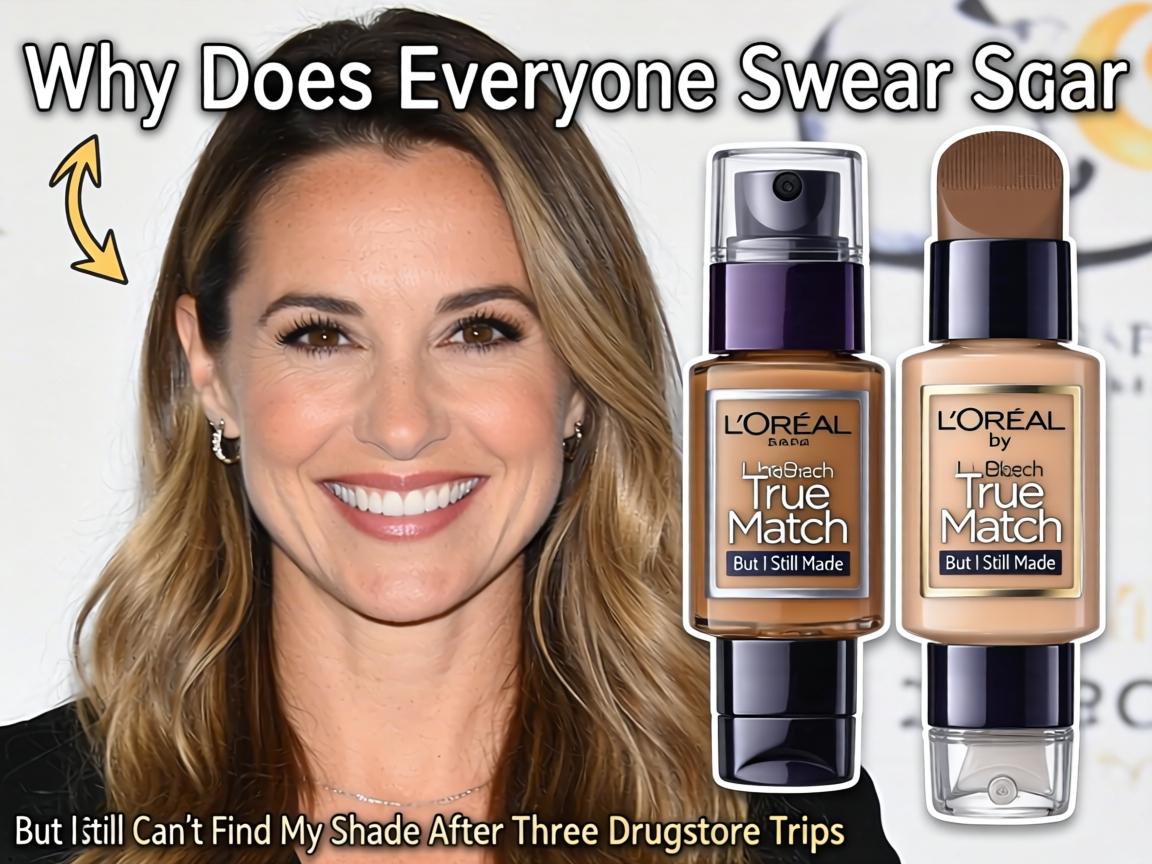

Finding your foundation shade shouldn’t feel like solving a Rubik’s cube blindfolded, yet here we are. L’Oreal True Match foundation color match problems seem to plague half the internet, and honestly? I’ve been there. Standing in Target’s makeup aisle, holding three different bottles up to my neck, wondering if I’m warm beige or neutral buff or just… confused.The thing is, True Match has 47 shades now. Forty-seven. That’s more than most high-end brands. But when you’re staring at W4 Natural Beige versus N4 Buff Beige and they look identical in that terrible fluorescent lighting, the number of options becomes overwhelming rather than helpful. I’ve watched friends buy the wrong shade three times before giving up entirely. That’s money down the drain, and nobody wants that.So let’s break this down properly. No more guessing games.Understanding the C, N, W System
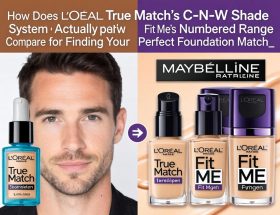
L’Oreal uses a letter-number combo that actually makes sense once someone explains it. C means Cool (pink, red, or blue undertones), N means Neutral (balanced between warm and cool), and W means Warm (yellow, golden, or peachy undertones). The numbers indicate depth—lower numbers are lighter, higher numbers go deeper .But here’s where it gets tricky. The shades don’t always progress logically. W6.5 and W7 are both warm medium shades, but W6.5 leans more beige while W7 pulls more yellow . This inconsistency trips people up constantly. You might be W5 in summer but W4.5 in winter, and finding that sweet spot requires actual testing, not just grabbing your “usual” number.The Vein Test Is Only Half the Story
We’ve all heard the wrist vein trick—blue veins mean cool undertones, green means warm, can’t tell means neutral. It’s… fine. I guess. But it’s not the whole picture. Your undertone can shift slightly with sun exposure, and some people (especially those with olive skin) have greenish-gray undertones that don’t fit neatly into the C, N, W boxes .A better approach? Look at what jewelry looks good on you. Silver flattering usually means cool undertones. Gold looking better suggests warm. If both work, you’re probably neutral. But even then, foundation oxidizes on your skin throughout the day, so that perfect morning match might turn orange by 3 PM .Testing Methods That Actually Work
Swatching on your wrist is basically useless. Your face and hands are different colors—usually your hands are lighter from less sun exposure. The jawline method is better, but even that has flaws. I started testing on my upper chest because that’s where my face should match when I’m wearing lower necklines .The real secret? Buy two shades that bracket your guess. If you think you’re W3, grab W2.5 and W3.5 too. Most drugstores have return policies on unopened makeup, and some Targets now have testers available for the full True Match range . Mix them on your face, wear them for a full day, check in natural light, artificial light, and that weird bathroom lighting that makes everyone look sick.Why Does My Shade Look Different Online?
This drives me crazy. The swatches on L’Oreal’s website, the photos on Ulta, the influencer reviews—they all show different colors. W4 Natural Beige looks peachy in one photo, yellow in another, almost pink in a third. Lighting, camera quality, and post-processing completely alter how these shades appear .The Match My Shade tool on L’Oreal’s website claims 95% accuracy using AI analysis of your skin through a 360° selfie video . I’ve tried it. It’s… okay. Better than blind guessing, but it suggested W3 when I’m actually W2.5. Close, but not perfect. The quiz version is even less reliable—it matched me with N2 when I’m definitely warm-toned.The Seasonal Shade Problem Nobody Talks About
Your “perfect match” in January won’t be your perfect match in July. Most people need two shades—one for winter, one for summer. L’Oreal doesn’t really advertise this, but it’s reality. If you’re W4 in winter, you’ll probably need W5 or W6 when you have a tan .Some people mix their winter and summer shades for spring and fall. Others just buy a darker shade and sheer it out with moisturizer. I’ve found that True Match blends well enough that you can get away with being slightly off if you blend down your neck properly.Common Shade Matching Mistakes
Going too light is the biggest error I see. People want that “brightening” effect, but foundation isn’t concealer. If your foundation is lighter than your neck, you look like you’re wearing a mask. It’s not cute. When in doubt, go slightly darker rather than lighter—you can always add highlight later .Another mistake? Ignoring undertone completely. I watched my sister buy C2 Alabaster for years because she thought she was “pale and pink.” Turns out she’s neutral with surface redness. Switching to N2 Classic Ivory changed everything—no more looking like she’d been crying.The Oxidation Factor
True Match oxidizes. Not dramatically, but enough to matter. That perfect swatch in the store might darken half a shade after an hour on your face. The reformulated 2023 version with hyaluronic acid seems slightly better about this, but it still happens .If you’re between two shades, pick the lighter one. It will darken slightly as it sets and throughout the day. This is especially true for the deeper shades in the range—the C8, C9, W9, W10+ shades seem to oxidize more noticeably than the lighter ones .Real Talk: Is True Match Actually Good?
Once you find your shade, yes. The formula is skincare-infused now with hyaluronic acid and vitamin E. It gives that “skin but better” finish that used to be exclusive to $50 foundations. I’ve had mine for six months and it’s still going strong—you really only need a pea-sized amount .But the shade matching process is genuinely frustrating. The gap between W2 and W3 is significant. The jump from N4 to N5 is noticeable. If you fall between shade numbers, you’re either mixing or settling for “close enough.”So What’s the Solution?
If you’re struggling to find your L’Oreal True Match foundation color match, here’s my honest advice: go to a store with testers. Swatch three shades on your jaw. Walk around for ten minutes. Check in natural light. Buy the one that disappears into your skin, not the one you wish matched your aesthetic.And if you buy the wrong shade? Don’t force it. Return it. Try again. The perfect match is in those 47 shades somewhere—you just have to be patient enough to find it.