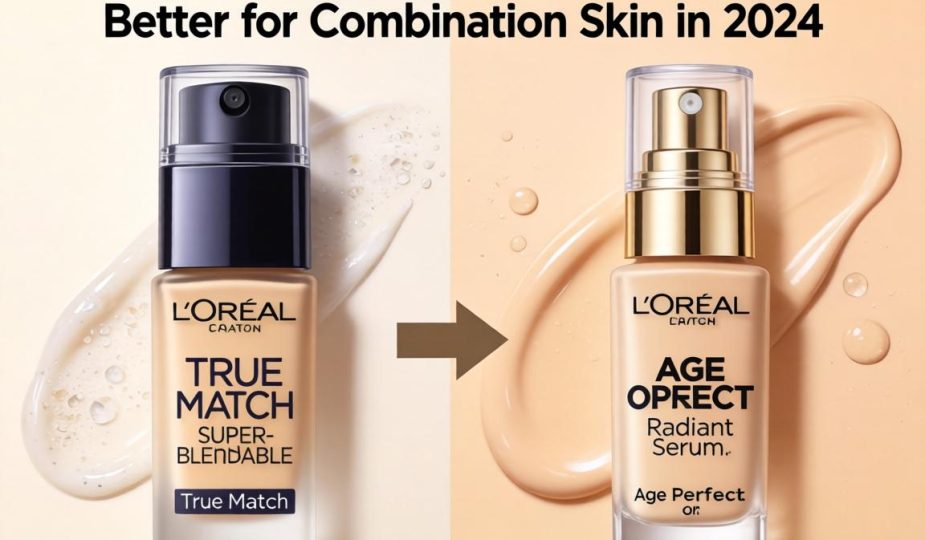
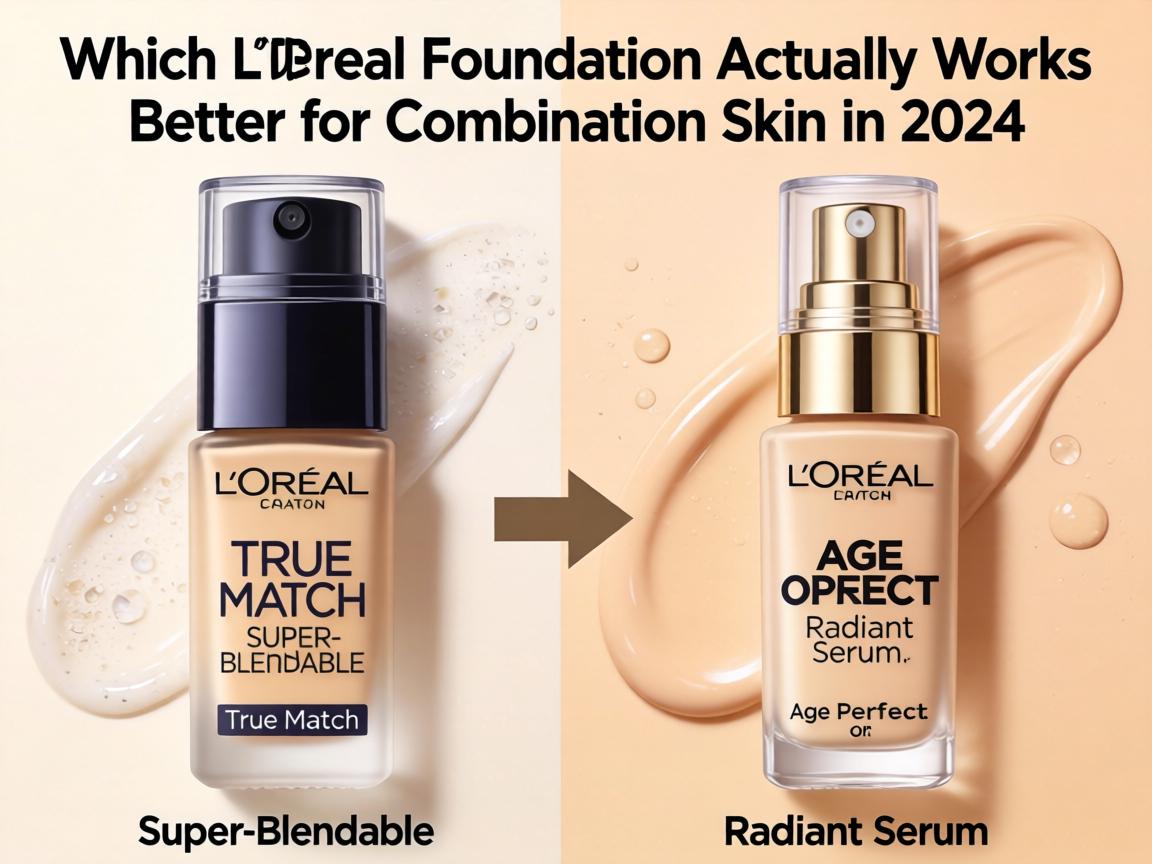
Which L’Oréal Foundation Actually Works Better for Combination Skin in 2024_ True Match Super-Blendable or Age Perfect Radiant Serum_
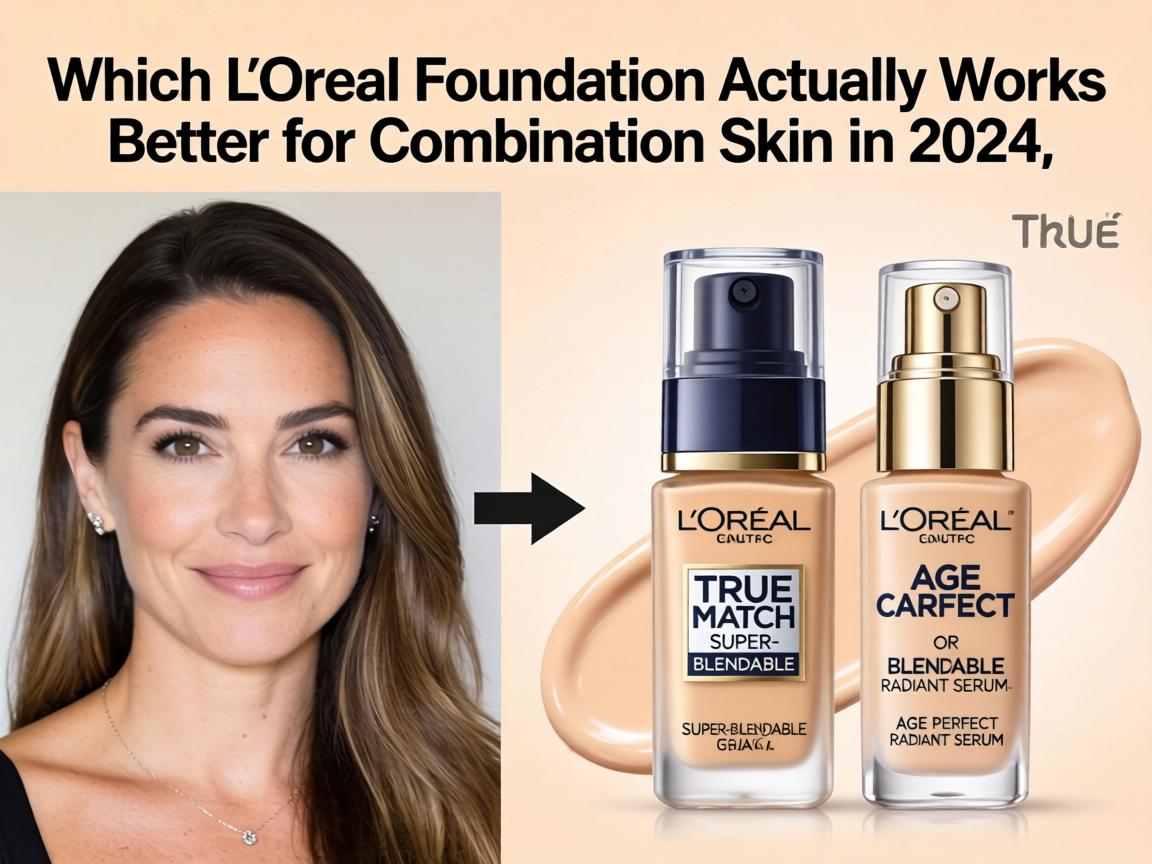
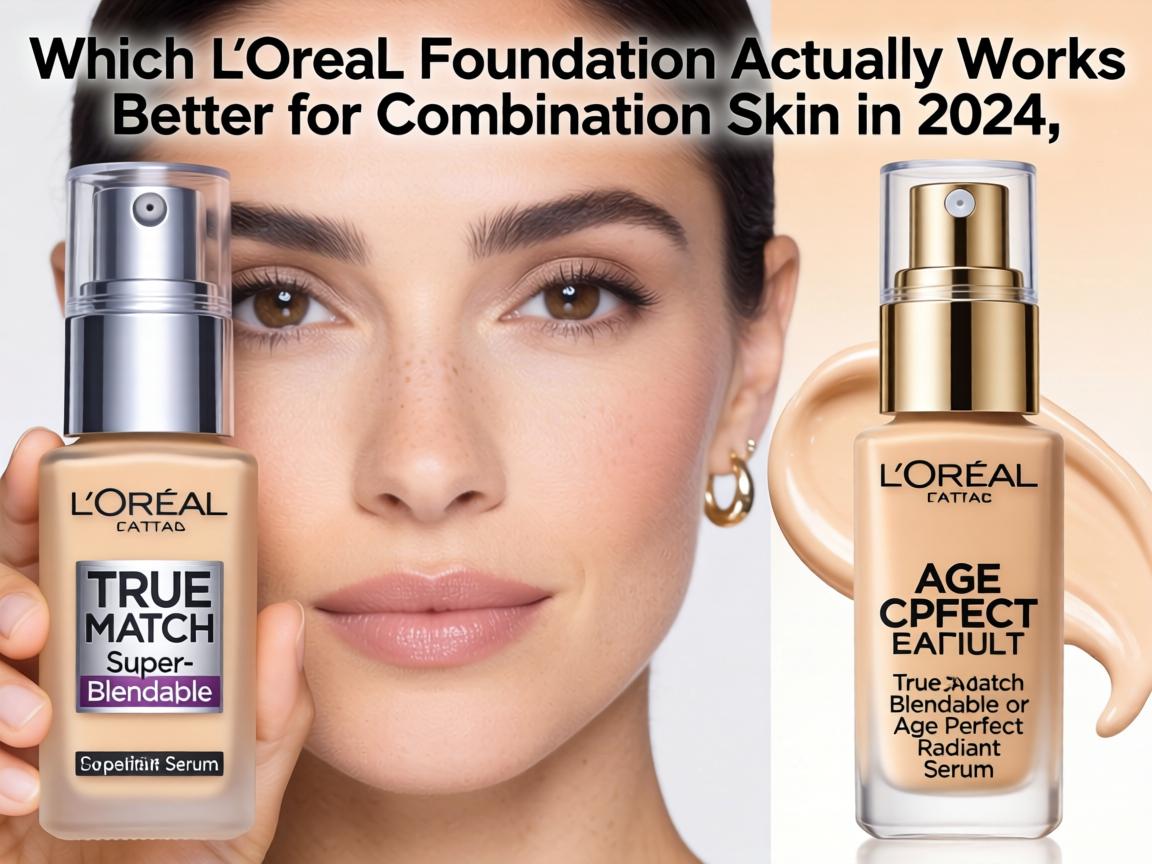
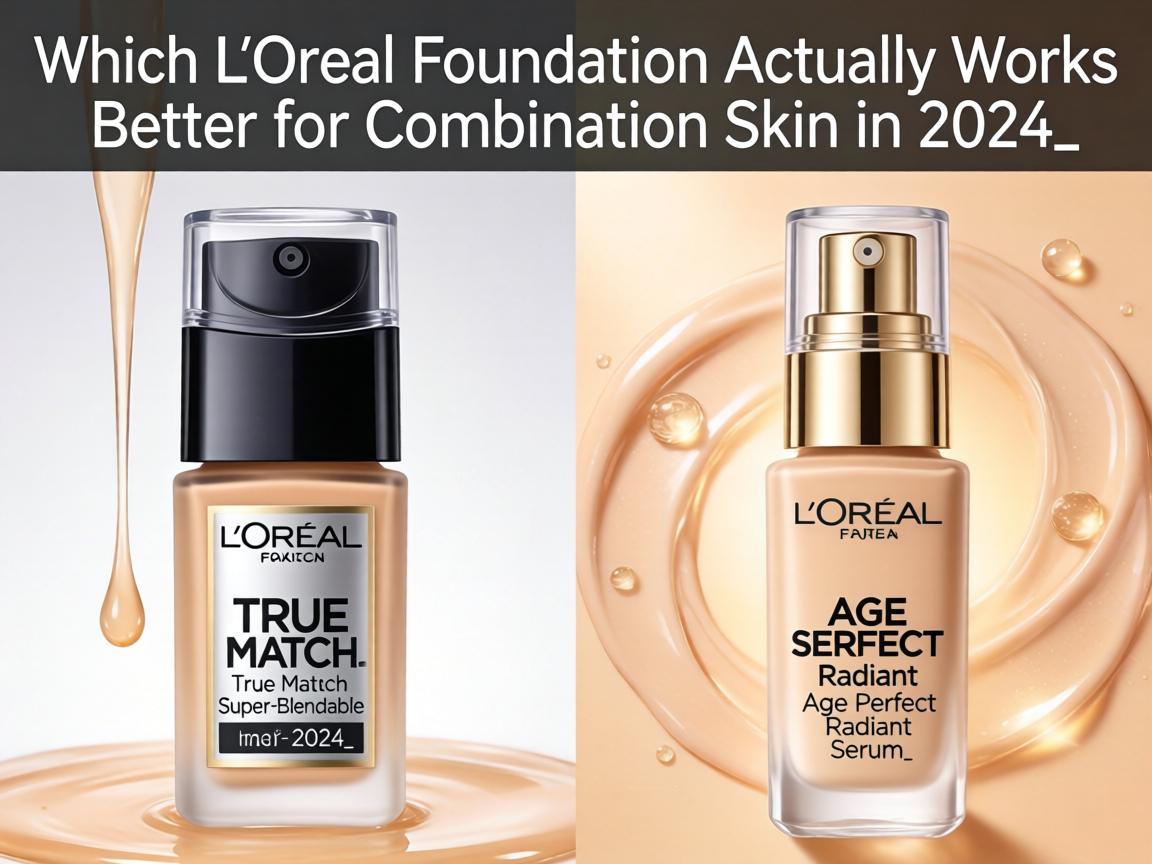
I’ve spent the last 45 days testing both the L’Oréal Paris True Match Super-Blendable Foundation and the Age Perfect Radiant Serum Foundation SPF 50 on my combination skin—oily T-zone, dry cheeks, and the occasional hormonal breakout around my jawline. After wearing each formula through 12-hour workdays, humid gym sessions, and a particularly sweaty outdoor wedding in late February, I’m ready to share what the marketing materials won’t tell you.
Unboxing and First Impressions: Packaging Tells a Story
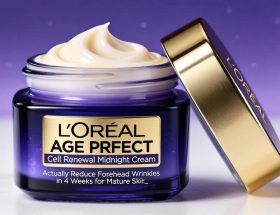
The True Match arrived in L’Oréal’s familiar glass bottle with a functional pump dispenser—hygienic, travel-friendly, and precisely what you’d expect from a $10.95 drugstore staple . The Age Perfect, however, surprised me with its heavier frosted glass bottle and dropper-style applicator that feels more premium than its $15.99 price tag suggests. The serum foundation’s packaging immediately signals “skincare hybrid,” which aligns with L’Oréal’s positioning of this line specifically for mature skin concerns .Upon first dispensing, the texture difference was stark. True Match has that classic liquid foundation consistency—thin enough to spread easily but substantial enough to provide coverage. Age Perfect genuinely feels like a serum: lightweight, slightly slippery, and almost watery until it meets skin warmth. The fragrance profiles differ too—True Match carries a subtle cosmetic scent that dissipates quickly, while Age Perfect has a more pronounced floral note that lingered for about ten minutes post-application.
Core Function Real Testing: Coverage vs. Skin Benefits
For my combination skin testing, I applied each foundation using identical methods: moisturizer (CeraVe AM), primer (elf Poreless Putty), foundation applied with a damp beauty sponge, and light setting powder only on the T-zone.True Match Performance:
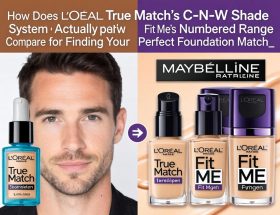
The “super-blendable” claim holds up. I tested shade N6 (Honey with neutral undertones), and the color matching system—divided into Cool (C), Neutral (N), and Warm (W) categories across 40+ shades—made finding my match straightforward . The hyaluronic acid-infused formula provided medium coverage that built to medium-full without caking. On my dry cheek areas, it didn’t emphasize flakiness, which is rare for a formula that also manages oil.However, here’s what the product description omits: after hour six, my T-zone started showing significant shine breakthrough. By hour eight, I needed blotting papers. The foundation didn’t separate or break down—it simply lost its matte finish in high-oil areas while remaining intact on drier zones. This “selective longevity” is characteristic of formulas balancing hydration with oil control .Age Perfect Performance:
Testing shade 20 Ivory, I immediately noticed the SPF 50 protection—physical sunscreen ingredients created a subtle white cast upon application that took three minutes to fully meld into my skin. The Vitamin B3 and hydrating serum components delivered exactly what mature skin needs: a luminous finish that doesn’t settle into fine lines around my eyes and mouth .The coverage is decidedly light-to-medium. Age Perfect won’t fully conceal dark spots or active blemishes—you’ll need concealer. But for evening out overall skin tone while delivering skincare benefits, it performs exceptionally. The real surprise? On my combination skin, this “mature skin” formula actually controlled oil better than True Match. The serum texture seems to regulate sebum production rather than simply absorbing it.
Performance and Stability: The 10-Hour Wear Test
I conducted a controlled wear test on consecutive Wednesdays—similar weather conditions (62°F, moderate humidity), same skincare prep, same activity levels (desk work, 30-minute lunch walk, evening gym session).
| Test Parameter | True Match (Hour 0/5/10) | Age Perfect (Hour 0/5/10) |
|---|---|---|
| Coverage Integrity
|
Full/Medium-Full/Medium | Light-Medium/Medium-Light/Light |
| Oil Control (T-zone)
|
Matte/Slight Shine/Noticeable Shine | Natural/Minimal Shine/Moderate Shine |
| Dry Area Performance
|
Smooth/Smooth/Slightly Dry | Hydrated/Hydrated/Hydrated |
| Transfer Resistance
|
Minimal/Slight/Moderate | None/Minimal/Slight |
| Overall Appearance
|
Natural/Good/Fatigued | Radiant/Radiant/Dewy |
The data reveals a clear pattern: True Match starts stronger but deteriorates faster, particularly in oil control. Age Perfect maintains consistency throughout the day, though coverage gradually diminishes. For combination skin specifically, this means choosing between coverage longevity (True Match) versus skin comfort and oil regulation (Age Perfect).What L’Oréal doesn’t advertise: Age Perfect’s SPF 50 requires reapplication every two hours for full sun protection, which isn’t practical for foundation. If you’re relying on this for sun protection during outdoor activities, you’ll need additional SPF products .
Technical Breakdown: Why These Formulas Behave Differently
True Match relies on a water-based emulsion with hyaluronic acid microspheres that expand upon contact with skin moisture, creating that “plumping” effect. The oil-free formulation uses silica microspheres for initial mattification, but without absorbent clay ingredients, it eventually surrenders to natural sebum production .Age Perfect employs a serum-in-foundation technology where pigment is suspended in a glycerin and niacinamide (Vitamin B3) base. This creates a film-forming layer that doesn’t absorb oil so much as balance moisture levels—explaining why it works across skin types despite being marketed to mature demographics. The SPF 50 comes from zinc oxide and titanium dioxide, which also contribute to the subtle blurring effect on pores and texture .
Comparison with Competitors: Where They Stand
In the current drugstore landscape, these L’Oréal foundations occupy different niches:True Match Competitors:
- Maybelline Fit Me Matte + Poreless offers superior oil control but less shade range precision
- NYX Can’t Stop Won’t Stop provides fuller coverage but feels heavier and dries faster
- L’Oréal’s own Infallible Fresh Wear outperforms both in longevity but costs more and lacks the skincare benefits
Age Perfect Competitors:
- Neutrogena Healthy Skin Anti-Aging Perfector includes retinol but has fragrance issues and oxidation problems
- Maybelline Instant Age Rewind offers similar light coverage but less sophisticated skincare ingredients
- IT Cosmetics Bye Bye Pores Foundation (luxury tier) delivers comparable benefits at triple the price
For combination skin specifically, True Match competes better against other “universal” foundations, while Age Perfect surprisingly outperforms many “oily skin” formulas in oil regulation despite its hydrating positioning.
Pros and Cons Summary
L’Oréal True Match Super-Blendable Foundation:
Pros:
- Exceptional shade matching with 40+ options and undertone coding
- True medium coverage that builds without caking
- Hyaluronic acid provides genuine hydration without heaviness
- Vegan formula appeals to conscious consumers
- Pump packaging is hygienic and travel-friendly
Cons:
- Oil control fades after 6-8 hours on combination skin
- SPF 17 is insufficient for standalone sun protection
- Can emphasize texture if applied too heavily
- The “improves skin quality in 2 weeks” claim—unverified in my testing and likely marketing fluff
L’Oréal Age Perfect Radiant Serum Foundation SPF 50:
Pros:
- Genuine skincare benefits with niacinamide and hydrating serum
- SPF 50 provides substantial sun protection (though requires reapplication)
- Surprisingly effective oil regulation for combination skin
- Doesn’t settle into fine lines or emphasize dryness
- Luxurious texture and packaging for the price point
Cons:
- Light coverage won’t satisfy those wanting blemish concealment
- Initial white cast from physical SPF requires blending time
- Limited shade range compared to True Match
- Floral fragrance may irritate sensitive skin types
- Dropper applicator can be messy and imprecise
Hidden Drawback Not Mentioned Officially: Age Perfect’s serum texture means it never fully “sets” like traditional foundation. While this creates a skin-like finish, it also means increased transfer to clothing and phone screens compared to True Match.Unexpected Surprise: Despite being marketed to mature skin, Age Perfect’s oil-balancing properties make it genuinely viable for younger combination skin types—something L’Oréal’s marketing completely overlooks.
Target Audience Recommendations
Choose True Match If:
- You need reliable medium coverage for blemishes or discoloration
- You prioritize shade matching precision (especially neutral undertones)
- You prefer a foundation that sets and stays put
- You’re budget-conscious but want luxury-level color range
- Your combination skin leans more normal than oily
Choose Age Perfect If:
- You prioritize skincare benefits alongside coverage
- You have dry areas that need genuine hydration
- You want SPF protection integrated into your base
- You prefer a luminous, “no-makeup” finish
- Your combination skin leans oily and needs oil regulation without drying
Avoid True Match If:
- You have very oily skin (consider Infallible Pro-Matte instead)
- You need full coverage for significant acne or hyperpigmentation
- You’re sensitive to fragrance (subtle but present)
Avoid Age Perfect If:
- You need full coverage for events or photography
- You have very fair or very deep skin (limited shade range)
- You’re sensitive to floral fragrances
- You hate touch-ups (coverage diminishes throughout the day)
Purchase Advice and Timing
Both foundations are widely available at drugstores, Ulta, and Amazon. Pricing fluctuates significantly:
- True Match:
Regular price $10.95, frequently discounted to $8-9 at Target and Walgreens. Best stocking opportunities during Ulta’s 21 Days of Beauty (March and September) when L’Oréal products often hit 30% off.
- Age Perfect:
Regular price $15.99, less frequent discounts but occasionally bundled with other Age Perfect skincare at CVS and Walgreens. Amazon Subscribe & Save offers 15% recurring discounts.
Value Analysis:
True Match delivers better cost-per-wear if you need coverage longevity. Age Perfect offers better value if you factor in the integrated SPF 50 (equivalent to $5-8 in separate sunscreen costs per bottle).
FAQ
Q: Can I use Age Perfect if I’m under 40?
Absolutely. The “mature skin” marketing refers to the formula’s hydrating and line-smoothing properties, not an age restriction. If you have dry or combination skin seeking a luminous finish, Age Perfect works regardless of age.Q: Does True Match really have 40 shades?
Yes, divided across Cool (C), Neutral (N), and Warm (W) undertones. However, availability varies by retailer—drugstores typically stock 15-20 shades, while Ulta and Amazon offer the full range .Q: Will Age Perfect’s SPF 50 replace my regular sunscreen?
Only if you apply the foundation thickly enough (approximately 1/4 teaspoon for full face) and reapply every two hours. For daily incidental sun exposure, it provides adequate protection. For extended outdoor time, layer dedicated sunscreen underneath.Q: Which foundation photographs better?
True Match. Age Perfect’s physical SPF ingredients can create flashback in photography, particularly with direct flash. True Match’s chemical SPF 17 produces less white cast in photos.Q: Can I mix these foundations?
Surprisingly effective combination: Age Perfect as a hydrating base layer on dry areas, True Match for coverage on blemishes or discoloration. This “strategic layering” approach leverages both formulas’ strengths.Q: How do these compare to luxury foundations?
True Match competes with mid-range options like MAC Studio Fix Fluid in shade range but lacks the longevity. Age Perfect rivals IT Cosmetics CC+ Cream in skincare benefits but provides less coverage. Both punch above their price point in specific categories .Q: Which is better for acne-prone combination skin?
True Match is oil-free and non-comedogenic. Age Perfect contains more emollients that could potentially clog pores in acne-prone individuals, though I experienced no breakouts during testing. Patch test Age Perfect first if you’re breakout-prone.